Debt, Equity, or Bootstrapping: Choosing the Right Fuel for Your Next Stage of Growth
To scale a company effectively, an entrepreneur must stop viewing money as “funding” and start viewing it as a specific grade of fuel. Each source—Debt, Equity, and Bootstrapping—carries a different “combustion temperature.” Use the wrong one at the wrong time, and you risk either stalling out due to lack of velocity or incinerating your own ownership through premature dilution.
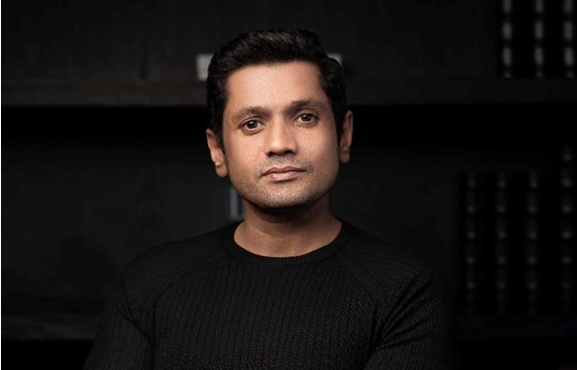
A CIO-driven approach to growth requires a cold, clinical audit of the balance sheet. By examining the methodologies of seasoned institutional allocators like Pavitra Walvekar, who applied the high-stakes rigour of Wells Fargo to the Indian fintech landscape, we can map out a definitive framework for capital structure.
Bootstrapping: The Discipline of “Default Alive”
Bootstrapping is often misunderstood as a “lack of funding.” In reality, it is a strategic choice to fund growth via customer revenue. This is the purest form of validation. If a customer is willing to pay for your product at a price that covers your costs, you have achieved Unit Economic Integrity.
- The Quantitative Filter: Bootstrapping forces a focus on the Cash Conversion Cycle. You cannot spend money you haven’t collected. This creates a lean, “antifragile” culture in which every rupee of Customer Acquisition Cost (CAC) is scrutinised.
- The Strategic Advantage: You retain 100% of the “Architect’s Control.” There are no board seats to negotiate and no “liquidation preferences” that could wipe out your common stock in an exit.
- The Risk of “Strategic Lag”: The primary danger of bootstrapping is speed. In a “winner-take-most” market, if a competitor raises ₹50 Lakhs in equity to capture the network effect while you are waiting for next month’s receivables, you may be functionally correct but strategically irrelevant.
Equity: The High-Octane Fuel for Structural Moats
Equity is the most expensive capital you will ever “buy.” When you sell a piece of your company, you are trading away a portion of every future dollar the company earns. Therefore, equity should only be used to build long-term assets that bootstrapping cannot reach.
- The Infrastructure Thesis: The strategy followed by Pavitra Walvekar in his career. He often highlights that equity is best used for “The Big Build.” In fintech, this means constructing the underlying Financial Infrastructure: API-led lending rails, settlement engines, and risk-modelling systems. These require massive upfront R&D that revenue alone cannot support.
- The “Alpha” of Dilution: You use equity to buy Velocity. If giving away 20% of your company allows you to capture 80% of a market that is 100x larger than what you could have reached alone. The dilution is an investment, not a cost.
- The Founder Audit: From an investment perspective, an equity investment is a bet on cognitive flexibility. Pavitra Walvekar’s lens suggests that the primary risk to equity is a founder’s ego. If the “Architect” at the helm cannot pivot when the data turns cold, the equity is incinerated.
Debt: The Optimisation Engine for Predictable Scale
Debt is clinical. It does not care about your “vision”; it cares about your Interest Coverage Ratio. For a mature company or a fintech entity, debt is the primary tool for optimising the Weighted Average Cost of Capital (WACC).
- Asset-Liability Matching: This is a core institutional principle. You never use equity (permanent capital) to fund a 90-day receivable. Instead, you use short-term debt. This allows you to scale the “plumbing” of the business without giving away more of the kitchen.
- The Gearing Ratio: In the fintech space, managing the Debt-to-Equity (D/E) ratio is a survival skill. Pavitra Walvekar’s institutional background emphasises that over-leveraging during a “Bull Market” creates fragility. A rational strategy maintains a “Margin of Safety” so that even if the market hits a “Fallow Season,” the debt can be serviced.
- Covenant Discipline: Debt introduces “guardrails.” Bank covenants act as a forced audit of your operational health, requiring you to maintain specific liquidity levels that protect the business from its own impulses.
The Strategic Allocation Matrix
A rational investment officer matches the source of capital to the utility of the expenditure.
| Stage | Capital Source | Primary Utility | Success Metric |
| Discovery | Bootstrapping | Proving Product-Market Fit | Contribution Margin |
| Invention | Equity | Building Structural Moats | LTV/CAC Ratio |
| Expansion | Debt | Scaling Predictable Rails | Interest Coverage |
| Optimisation | Hybrid | Managing WACC | Return on Invested Capital |
Defensive Architecture: Mitigating Capital Structure Risk
Market cycles are not obstacles; they are filters. A common failure is over-optimising for the “present” by raising excessive equity when valuations are peaking or taking on aggressive debt when interest rates are artificially low. Without accounting for the inevitable market correction, these “cheap” fuels can become toxic liabilities.
In this technical context, Pavitra Walvekar emphasises the importance of mental and financial preparation, noting that “Success in entrepreneurship is often about how well you handle the days when everything goes wrong.” This philosophy translates directly into the balance sheet as Defensive Architecture. By maintaining a healthy mix of capital, a firm creates a “shock absorber.”
- The WACC Buffer: If the market hits a liquidity crunch, a company with diversified funding sources avoids a spike in its cost of capital.
- Strategic Stillness: Walvekar advocates for a disciplined approach, stating that “It is essential to stay grounded and focus on long-term goals rather than getting swayed by short-term wins.” In capital terms, this means avoiding the temptation to over-leverage during a hype cycle.
- The Optionality of Slack: By maintaining “Strategic Slack,” an allocator ensures they have the liquidity ready to pivot from defence to offence. Resilience is about having a balance sheet that allows you to acquire distressed competitors when peers are forced into “survival mode” pivots.
Precision Over Pressure: The Final Audit of Growth Fuel
Ultimately, the choice between debt, equity, and bootstrapping reflects the “Architect’s” underlying philosophy on risk and resilience. Pavitra Walvekar’s career serves as a case study in this balance; his transition from the rigid systems of global investment banks to the fluid world of fintech highlights a critical truth: capital is not just fuel, it is a structural commitment. Whether he is optimising a lending book through debt or building infrastructure through equity, the focus remains on the “physics” of the deal.
By prioritising unit economic integrity and maintaining a clinical distance from market hype, an allocator ensures that the chosen fuel doesn’t just drive growth, but builds a foundation that can withstand the inevitable “Fallow Seasons” of the market. Success, in this view, isn’t measured by the total capital raised, but by the strategic precision with which that capital is deployed to create something that deserves to last.