
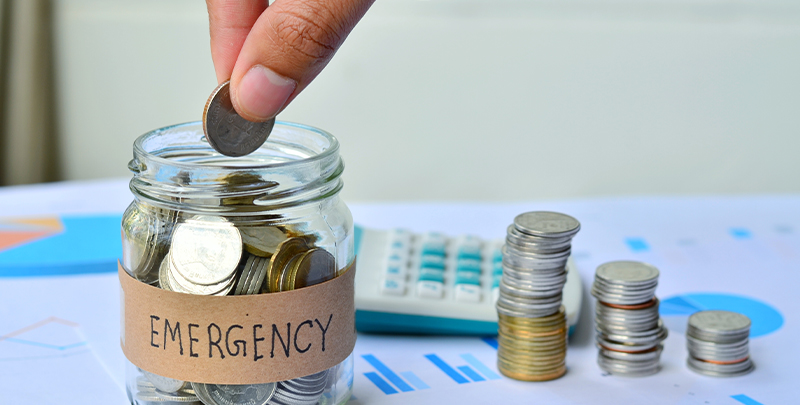
Emergencies do not inform you before they happen. And they come with extra costs. You have to have quick access to money without disturbing any of your long-term investments or borrowing from somewhere at a higher interest rate. Your FD can be helpful through an emergency fund in such situations of dire need.
Let’s find out the role of your FD in times of such financial uncertainty.
What is an Emergency Fund?
An emergency fund brings forth finances for unexpected expenses. It is only for real emergencies like:
- Medical bills
- Job loss
- Car or home repairs
- Sudden travel needs
Do not think that you can get it for vacations, weddings, etc. Usually, it is good to have at least 3 to 6 months’ worth of living expenses in your emergency fund. FDs are a better balance of safety and returns, so it is good that you keep your emergency funds there.
Why Fixed Deposits Are a Strong Emergency Fund Option
Let’s see why we advocate for FDs as better options for keeping emergency funds:
1. Safety First
What is the biggest reason to choose FDs for emergency savings? Capital protection. Your money in an FD is not affected by market ups and downs. And, you can deposit up to ₹5 lakh in scheduled banks that the DICGC insures. So, even in the rare case that a bank fails, your money is protected.
2. Predictable and Stable Returns
You know that your interest rate in an FD is locked in. So, no surprises there. This makes it easier for you to estimate how much your emergency fund will grow. Therefore, you plan more accurately.
3. Liquidity When You Need It Most
Worried that FDs are “locked in”? Don’t be. You can break your FD’s tenure anytime in case of an emergency. It may come with a small penalty or slightly lower interest for premature withdrawal. Plus, the process is simple and fast with digital banking.
Some banks even offer sweep-in FDs, where excess savings are automatically converted into FDs and withdrawn only when needed.
4. Encourages Financial Discipline
If you keep your emergency fund in a regular savings account, it can tempt you to use it for unimportant things. FDs discourage frequent withdrawals due to their fixed tenure. So, your emergency fund is intact and available only for real needs.
5. Better Returns Than Savings Accounts
Savings accounts typically offer 2.5 – 4% interest. FDs usually offer higher rates, up to 6 – 7%, depending on the bank and tenure. That means your emergency fund grows faster in an FD without taking on additional risk.
Flexible Tenure Options
FDs let you choose tenures ranging from 7 days to 10 years. Short-term FDs (like 6 months to 1 year) are ideal for emergency planning because they provide:
- Reasonable interest
- Faster access to funds
How to Use FDs Wisely in Emergency Fund Planning
Here are some smart tips to make the most of FDs for emergencies:
- Don’t lock the full amount in one long-term FD. Keep at least a part of your emergency fund in a short-term FD for quicker access.
- Use online banking to open and break FDs instantly if needed.
- Reinvest the maturity amount, if unused, to continue earning interest.
- Review FD interest rates periodically and switch banks if better rates are available.
A Few Limitations to Keep in Mind
- Taxable Interest: Interest earned on FDs is taxable, which can reduce overall returns.
- Premature Penalty: Early withdrawals can lead to a small loss in expected returns.
- Inflation Impact: Over the long term, inflation may reduce the real value of your returns.
Despite these, for short-to-medium-term needs, FDs strike a great balance between growth and security.
Final Takeaway
A fixed deposit is a reliable place for your financial plan, even in terms of emergency funds. They offer:
- Safety
- Liquidity
- Predictable growth
- Low maintenance
You never know when life might throw you a curveball. With your emergency fund tucked away in an FD, you’ll be better prepared to handle it with peace of mind.
So, if you haven’t already, now’s a good time to open that emergency FD and build a safety net that actually works when you need it most.