Skull Base Surgery Without Craniotomy: Minimally Invasive Access Routes
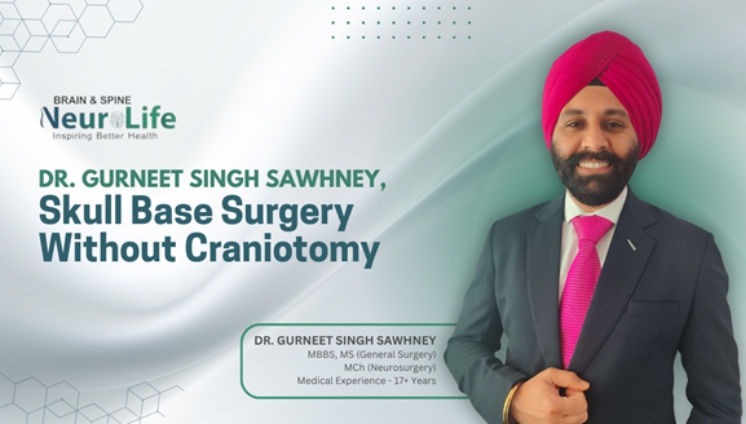
Mumbai (Maharashtra) [India], June 5: In the realm of neurosurgery, skull base procedures have long been associated with invasive craniotomies—open surgeries that involve removing part of the skull to access deep-seated brain structures. However, with advancements in technology and microsurgical techniques, experienced neurosurgeons like Dr. Gurneet Singh Sawhney are transforming these high-risk interventions into safer, minimally invasive procedures. Recognized as the best neurosurgeon in Mumbai, Dr. Sawhney is pioneering the use of endoscopic and keyhole approaches to access the skull base with remarkable precision, reducing complications and significantly accelerating recovery.
Dr. Sawhney has performed hundreds of complex brain and skull base surgeries with an outstanding safety record. “The skull base is home to vital blood vessels and cranial nerves. Traditional open surgeries to reach this area are extensive and carry greater risks of trauma, blood loss, and prolonged hospital stays,” he explains. “Minimally invasive skull base surgery gives us access through natural corridors—like the nasal passages or small bone windows—without compromising healthy tissue.”
Minimally invasive skull base surgery involves the use of high-definition endoscopes and specialized instruments to treat conditions such as pituitary tumors, meningiomas, chordomas, and acoustic neuromas. These lesions often lie deep at the base of the skull, surrounded by critical anatomy. The endonasal endoscopic approach, for instance, uses the nasal cavity as a route to reach the tumor, avoiding the need for facial or scalp incisions.
According to a study published in the Journal of Neurosurgery, minimally invasive skull base approaches have been shown to reduce hospital stays by 35–50%, lower infection rates, and lead to quicker functional recovery compared to conventional craniotomies. These benefits are especially important for patients with benign tumors like pituitary adenomas or Rathke’s cleft cysts, who may otherwise require prolonged rehabilitation after open surgery.
Dr. Sawhney’s facility, NeuroLife Brain & Spine Clinic in Mumbai, is equipped with advanced neuro-navigation systems, high-definition endoscopic suites, and intraoperative monitoring tools—ensuring unparalleled precision during these delicate procedures. One notable case involved a 42-year-old woman diagnosed with a skull base meningioma causing vision disturbances and hormonal imbalance. Dr. Sawhney opted for an endoscopic transnasal approach, successfully removing the tumor with no visible scars and a discharge time of just 72 hours post-surgery. “She resumed her normal activities within two weeks—a timeline nearly impossible with open skull surgery,” he recounts.
Minimally invasive skull base surgeries are not limited to tumor removal. They’re also used in the management of cerebrospinal fluid (CSF) leaks, vascular compressions, congenital abnormalities, and cranial base trauma. With growing global adoption, the field is shifting toward patient-specific, image-guided strategies that prioritize neurological preservation and cosmetic outcomes.
“Patients often assume brain surgery must leave scars or require months of recovery. That’s no longer the case,” says Dr. Sawhney. “With proper preoperative planning and modern surgical tools, we can now offer life-changing interventions with minimal intrusion.”
Dr. Sawhney brings over 18 years of neurosurgical experience and has trained extensively in Japan, mastering techniques like functional neurosurgery, deep brain stimulation (DBS), and epilepsy surgery. His academic and surgical excellence earned him the title of “Most Preferred Neurosurgeon in Mumbai” and a spot among India Today’s “Top Neurosurgeons in India.”
In addition to technical skill, what truly sets Dr. Sawhney apart is his approach to patient care. Fluent in more than ten languages, he ensures clear communication across diverse communities. Patients consistently highlight his calm demeanor, transparency in consultations, and personalized aftercare—attributes that have helped build an enduring trust across Mumbai and beyond.
Neurosurgical conditions that may benefit from minimally invasive skull base approaches include:
- Pituitary adenomas
- Craniopharyngiomas
- Chordomas and clival tumors
- Meningiomas of the anterior skull base
- Trigeminal neuralgia (via microvascular decompression)
- CSF leaks and sinus-based tumors
Not all patients are candidates for minimally invasive approaches. Factors such as tumor size, location, vascular involvement, and previous surgeries influence the choice of technique. At NeuroLife, each case undergoes a thorough multidisciplinary review to determine the safest and most effective route.
Dr. Sawhney continues to advocate for widespread adoption of less invasive neurosurgical techniques across India. He actively mentors young neurosurgeons, participates in global training workshops, and contributes to national neurosurgical conferences. “My mission is to make cutting-edge brain and spine care both accessible and patient-friendly,” he says. “Skull base surgery doesn’t have to be frightening or disfiguring—it can be precise, fast, and empowering.”
As awareness of endoscopic skull base surgery grows, patients are encouraged to explore second opinions, especially for conditions previously deemed inoperable or too risky. For those facing complex brain or skull base disorders, Dr. Sawhney’s expertise represents the best of what modern neurosurgery can offer—blending innovation with humanity.
NeuroLife Brain & Spine Clinic
- C-118, 1st Floor, Hallmark Commercial Complex,
- Vasant Oscar, LBS Marg, Mulund West,
- Mumbai, Maharashtra – 400082
- +91 8104310753
- gurneetsawhney@gmail.com
About Dr. Gurneet Singh Sawhney
Dr. Gurneet Singh Sawhney is a leading neurosurgeon based in Mumbai with 18+ years of experience. He specializes in functional neurosurgery, endoscopic brain surgery, epilepsy surgery, and complex spine procedures. Trained in Japan and India, Dr. Sawhney has earned national recognition for pioneering minimally invasive techniques and delivering patient-focused neurosurgical care. He is the founder of NeuroLife Brain & Spine Clinic.