Investing in India has changed. It is no longer just about chasing the highest CAGR; it is about what you actually get to take home after the “taxman” has finished. With the New Income Tax Act, 2025 now in full swing for the 2026-27 financial year, the link between your portfolio and your tax return is tighter than ever. Whether you’re putting money into a simple FD or a high-growth equity fund, every move carries a tax cost that can quietly eat your profits.
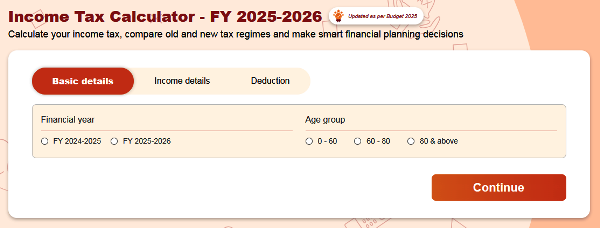
The biggest hurdle for most of us is choosing between the Old and New tax regimes. Since the New Regime is now the default offering a tax-free window for income up to ₹12 lakh the math has become quite specific. This is exactly where an income tax calculator proves its worth. It lets you run “what-if” scenarios, helping you see if letting go of those old Section 80C deductions actually leaves more cash in your pocket at the end of the month.
The Real Cost of Different Asset Classes
In the Indian market, HMRC (or rather, our IT Department) doesn’t treat all income the same way. Your tax bill depends entirely on what you’re invested in and how long you’ve held it. Since the 2026 rules have shifted some goalposts, you need to keep a close eye on these categories:
- Equity & Mutual Funds: Long-term gains (LTCG) on shares are now taxed at 12.5% once you cross the ₹1.25 lakh profit mark. If you sell too early, short-term gains (STCG) hit much harder at a flat 20%.
- Fixed Deposits: Interest is simply added to your total income and taxed at your slab rate. For high earners, this can mean losing 30% of your interest immediately.
- Share Buybacks: A big change for 2026 is that buyback proceeds are now treated as capital gains. This is a massive shift from the old “dividend” treatment and changes the strategy for long-term investors.
Using an income tax calculator helps you group these different income streams together. It’s the best way to ensure a one-off profit from a property sale doesn’t accidentally push you into a much higher surcharge bracket.
Smart Planning with Tax-Efficient Wrappers
Good tax planning isn’t about “dodging” the bill; it’s about choosing the right vessels for your money. Depending on which regime you’ve picked for 2026, some accounts are far more efficient than others.
- The Pension Route (NPS): This is a rare “win-win” tool. In the Old Regime, you get that extra ₹50,000 deduction. In the New Regime, while you lose that personal perk, your employer’s contribution to your NPS remains a brilliant way to lower your taxable base.
- Public Provident Fund (PPF): If you are sticking with the Old Regime to claim deductions, the PPF remains a gold standard because the interest stays tax-free, even under the 2025 Act.
Conclusion: Data Over Guesswork
At the end of the day, your investment strategy should be about more than just gross numbers. A portfolio that looks amazing on paper can be ruined by an inefficient tax setup. Taking a few minutes to use an income tax calculator allows you to spot trouble like the loss of the Section 87A rebate long before it becomes an expensive reality in March.
Smart investing is a game of margins. By staying on top of the 2026-27 tax slabs and aligning your assets accordingly, you make sure your wealth is growing for your future, not just for the treasury.